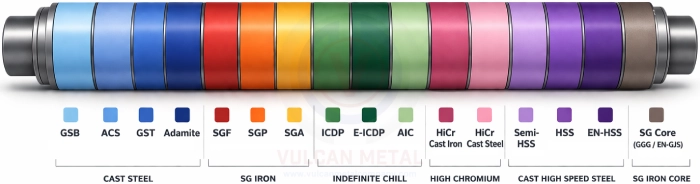
The terminology used in the rolling mill industry is not always based on strict metallurgical definitions and has, in some cases, developed through marketing. As a result, it is sometimes difficult to clearly differentiate between GSB, ACS, GST and Adamite roll materials.
Chemical composition, heat treatment and resulting microstructures may vary depending on roll design, mill configuration and rolling conditions. In addition, some manufacturers develop tailored subgrades to optimize performance for specific applications.
Overall, these materials follow a progressive metallurgical relationship, with increasing carbon content and carbide formation from GSB to Adamite, resulting in higher wear resistance while toughness gradually decreases.
Selecting the most suitable cast steel roll grade therefore often requires a case-specific technical evaluation. A brief technical exchange with Vulcan Metal can help determine the most appropriate solution based on current roll materials, mill configuration and operational experience.
The table below provides a simplified comparative metallurgical overview of these cast steel roll materials.
Graphitic Steel Base (GSB) rolling mill rolls are a type of low carbon cast steel roll containing controlled graphite formation within the microstructure, typically with a carbon content ranging from approximately 0.30% to 0.80%. Alloying additions such as nickel, chromium and molybdenum are commonly used to improve strength and hardenability.
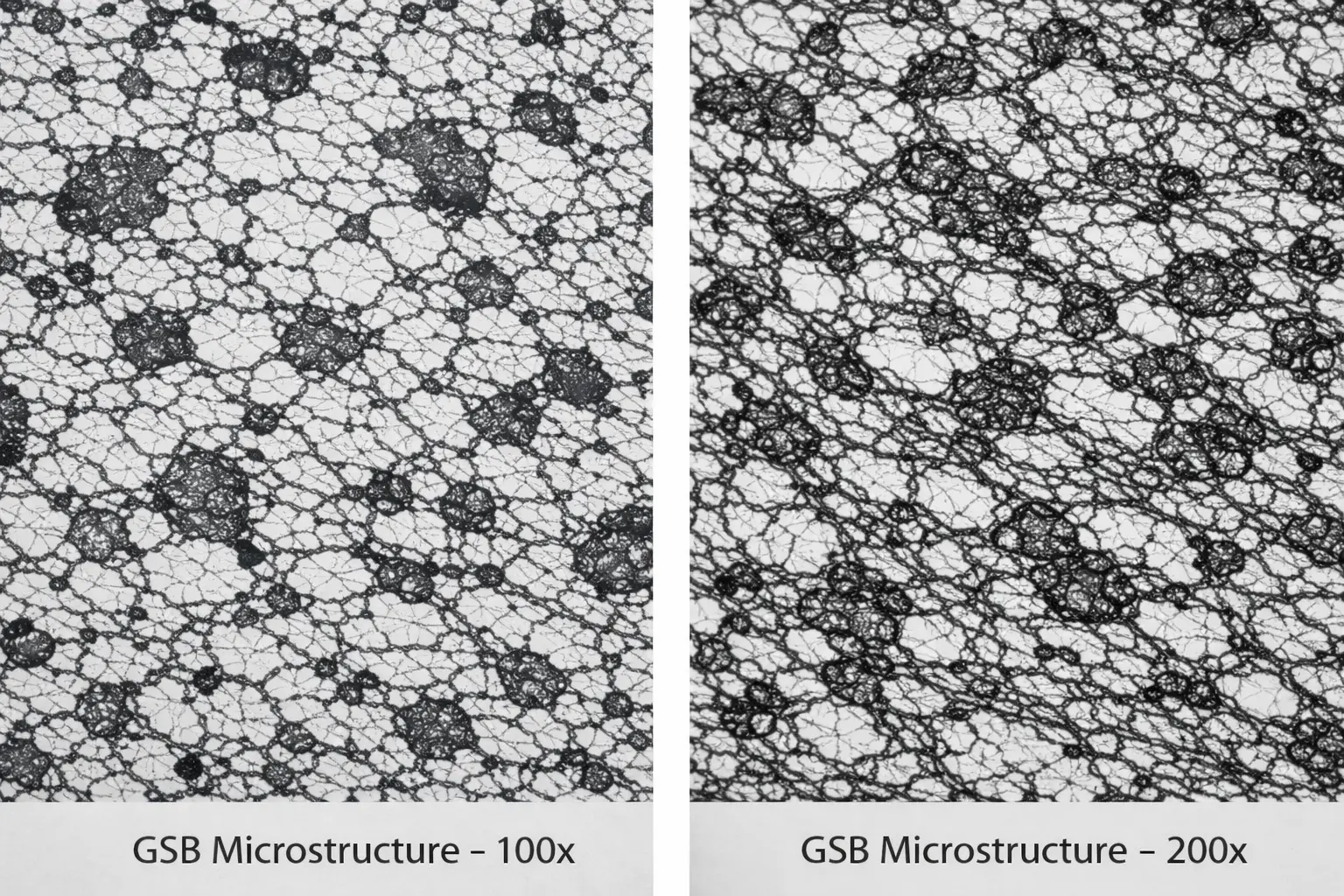
The microstructure is primarily composed of ferrite and fine pearlite together with dispersed graphite particles, with only limited carbide formation due to the relatively low carbon content. The presence of graphite contributes to improved resistance to thermal stress and helps reduce internal stress concentration.
Compared with higher carbon cast steel grades, GSB rolls provide superior resistance to thermal shock and high rolling loads while maintaining good mechanical strength.
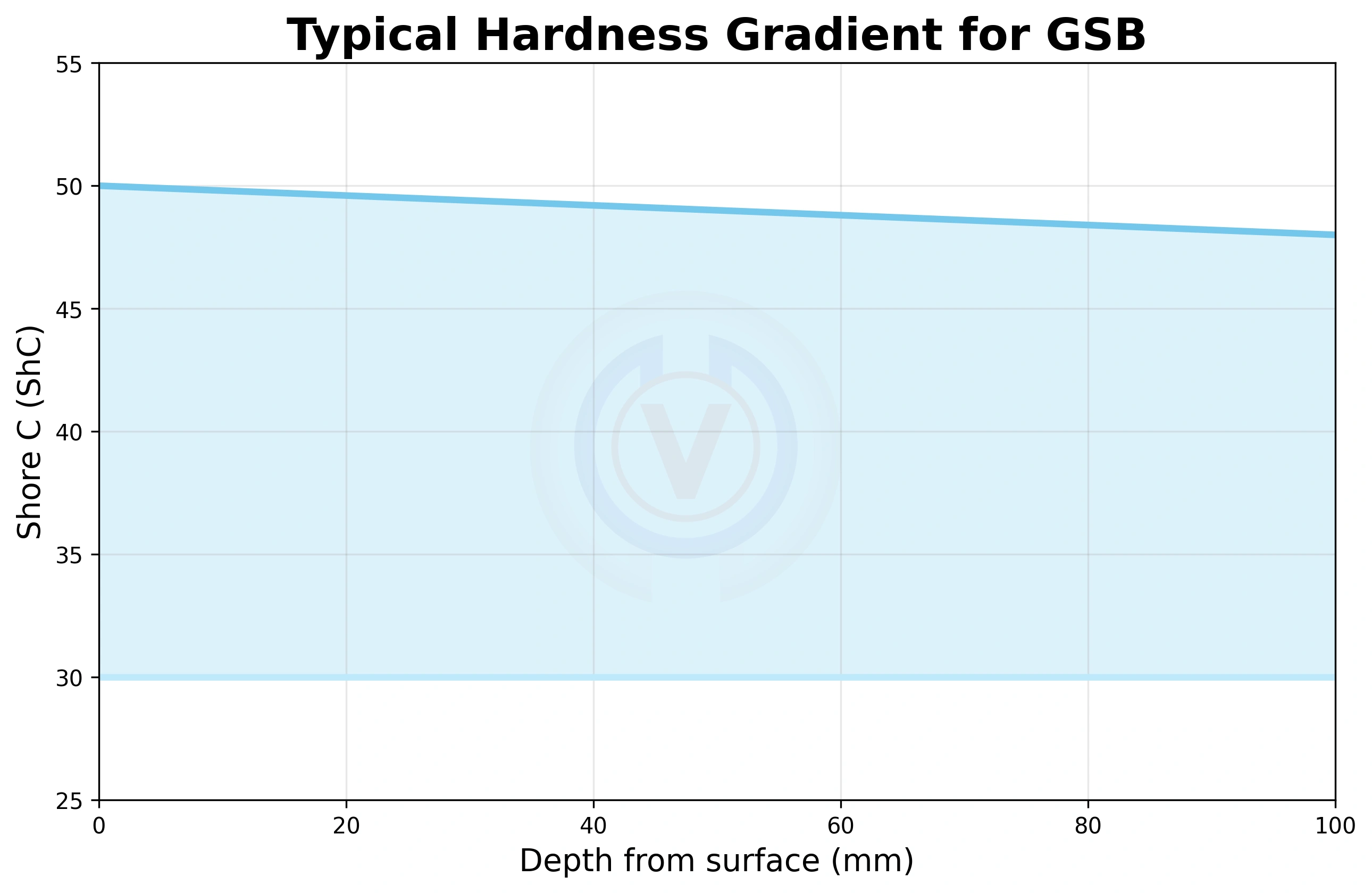
The rolls are typically normalized and tempered in order to obtain the required balance of toughness and hardness. Due to their low carbon cast steel structure, GSB rolls generally exhibit stable hardness penetration with minimal variation through the roll section.
Alloy Cast Steel (ACS) rolling mill rolls are a type of cast steel roll alloyed primarily with nickel, chromium and molybdenum, typically with a carbon content ranging from approximately 0.4% to 1.10%.
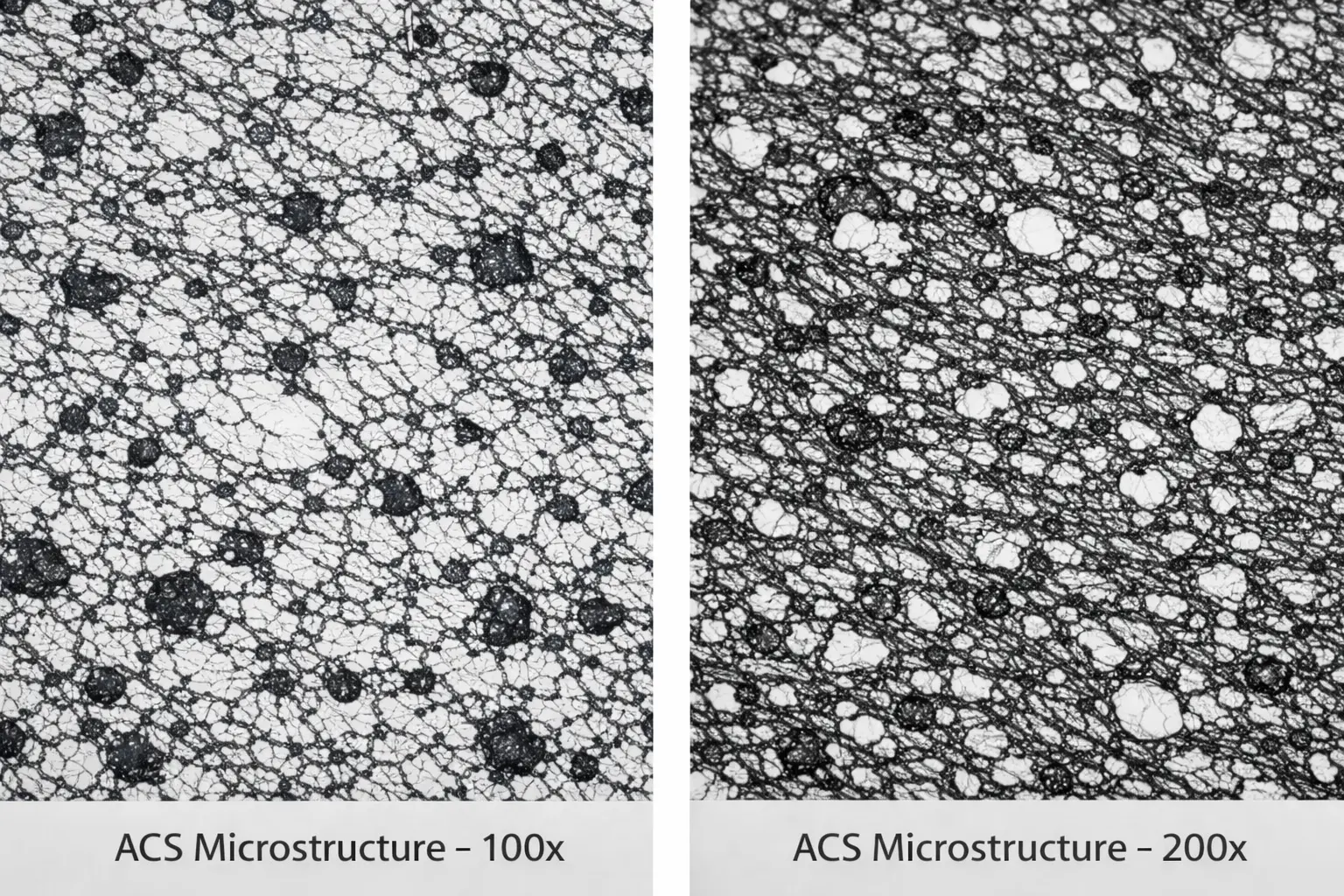
The microstructure varies depending on carbon content and heat treatment conditions. Lower carbon grades generally consist of ferrite and fine pearlite, while higher carbon grades develop a fully pearlitic structure containing dispersed alloy carbides.
Compared with lower alloy steels, ACS rolls provide higher mechanical strength and improved wear resistance due to the combined effect of alloying elements and controlled heat treatment.
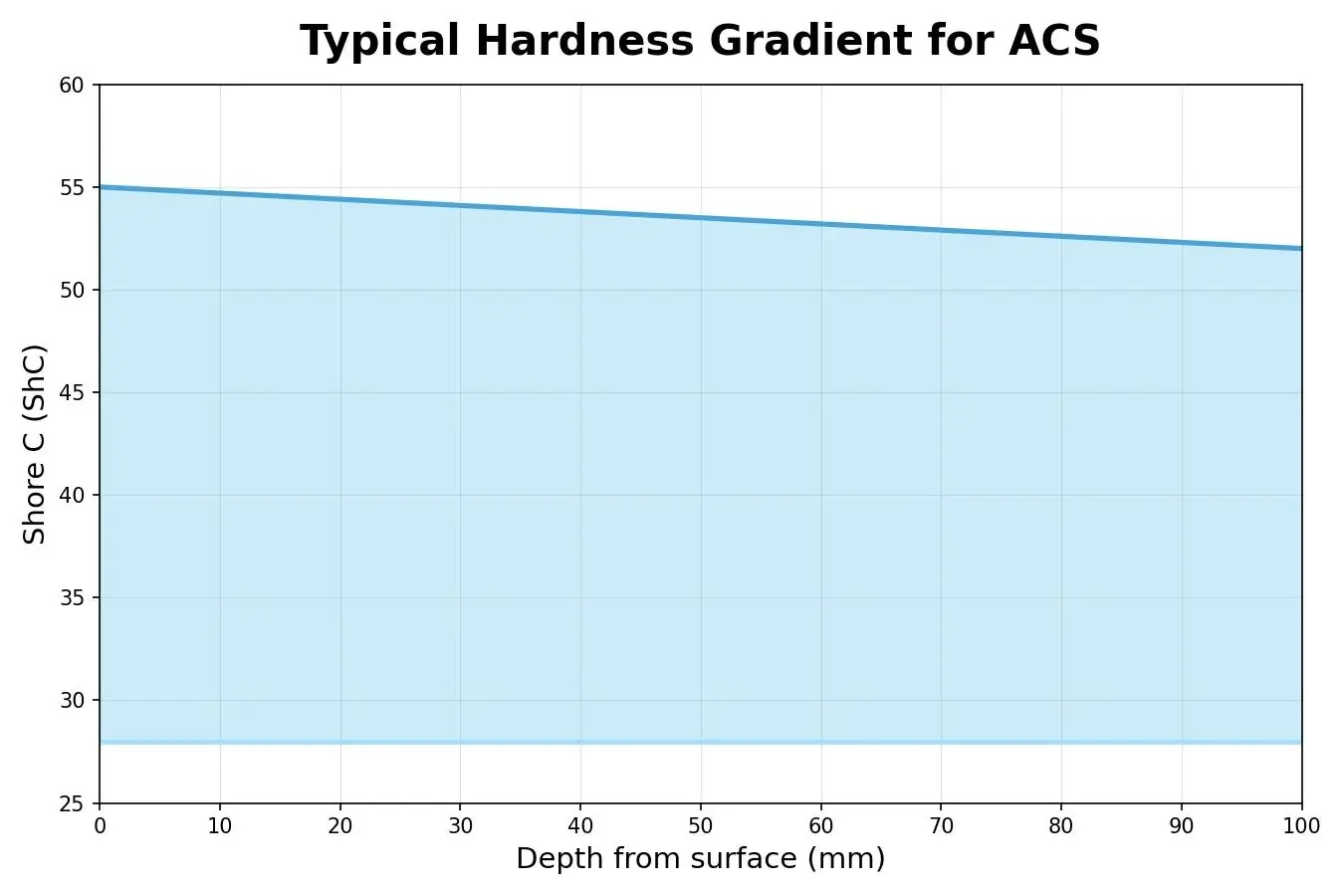
The rolls are typically subjected to controlled heat treatment and tempering in order to achieve the required balance of hardness, toughness and wear resistance. Due to their cast steel structure, ACS rolls generally exhibit stable hardness penetration with no significant decrease in hardness with increasing depth.
Graphitic Steel (GST) rolling mill rolls are a type of medium carbon cast steel roll, typically containing approximately 0.90% to 1.30% carbon, with alloying additions such as nickel, chromium and molybdenum to improve strength, wear resistance and hardenability.
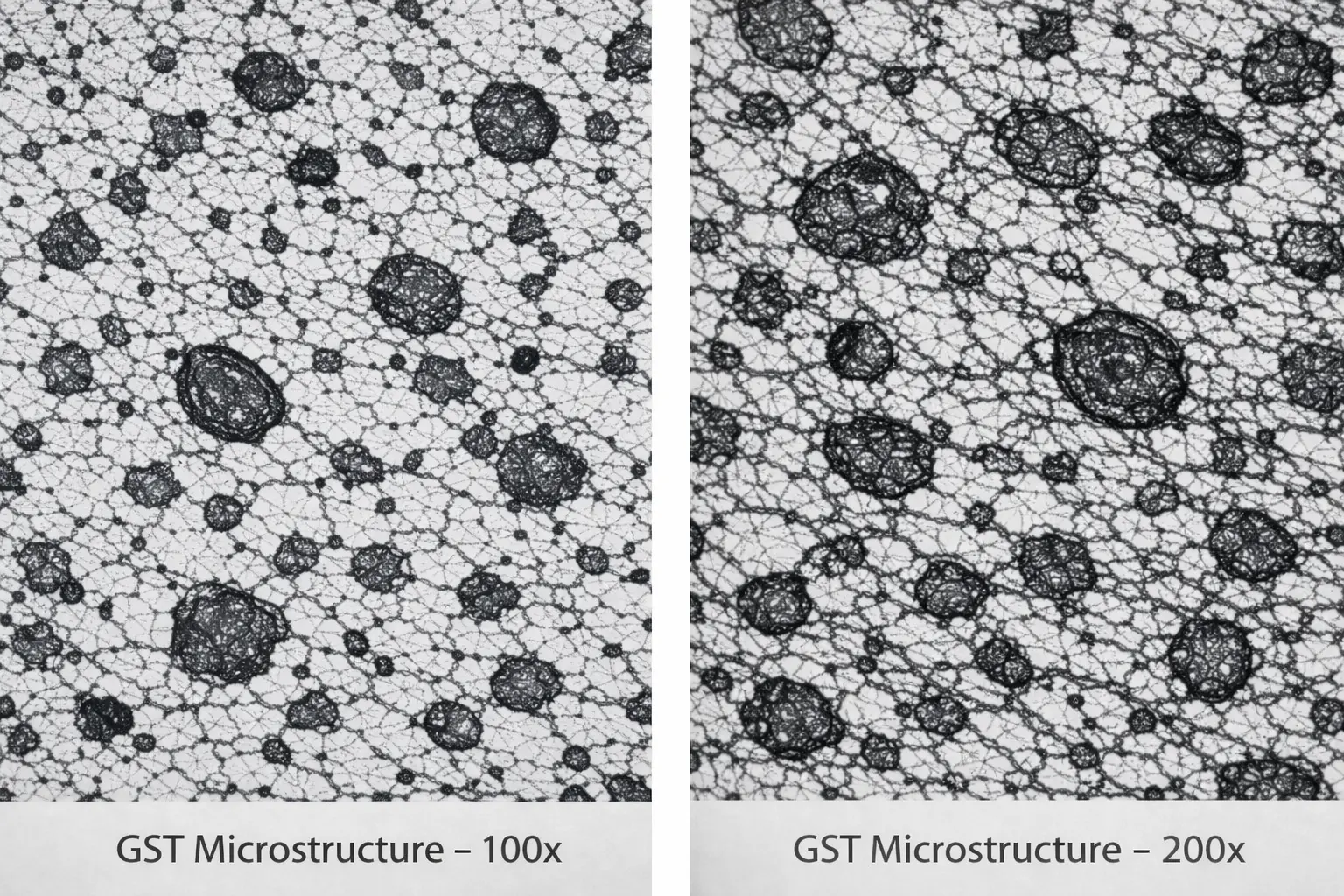
The microstructure generally consists of a fine pearlitic matrix containing dispersed alloy carbides. In some grades small graphite particles may also be present depending on composition and heat treatment conditions.
Compared with lower carbon cast steel grades, GST rolls provide improved wear resistance due to the higher carbon content and increased carbide formation.
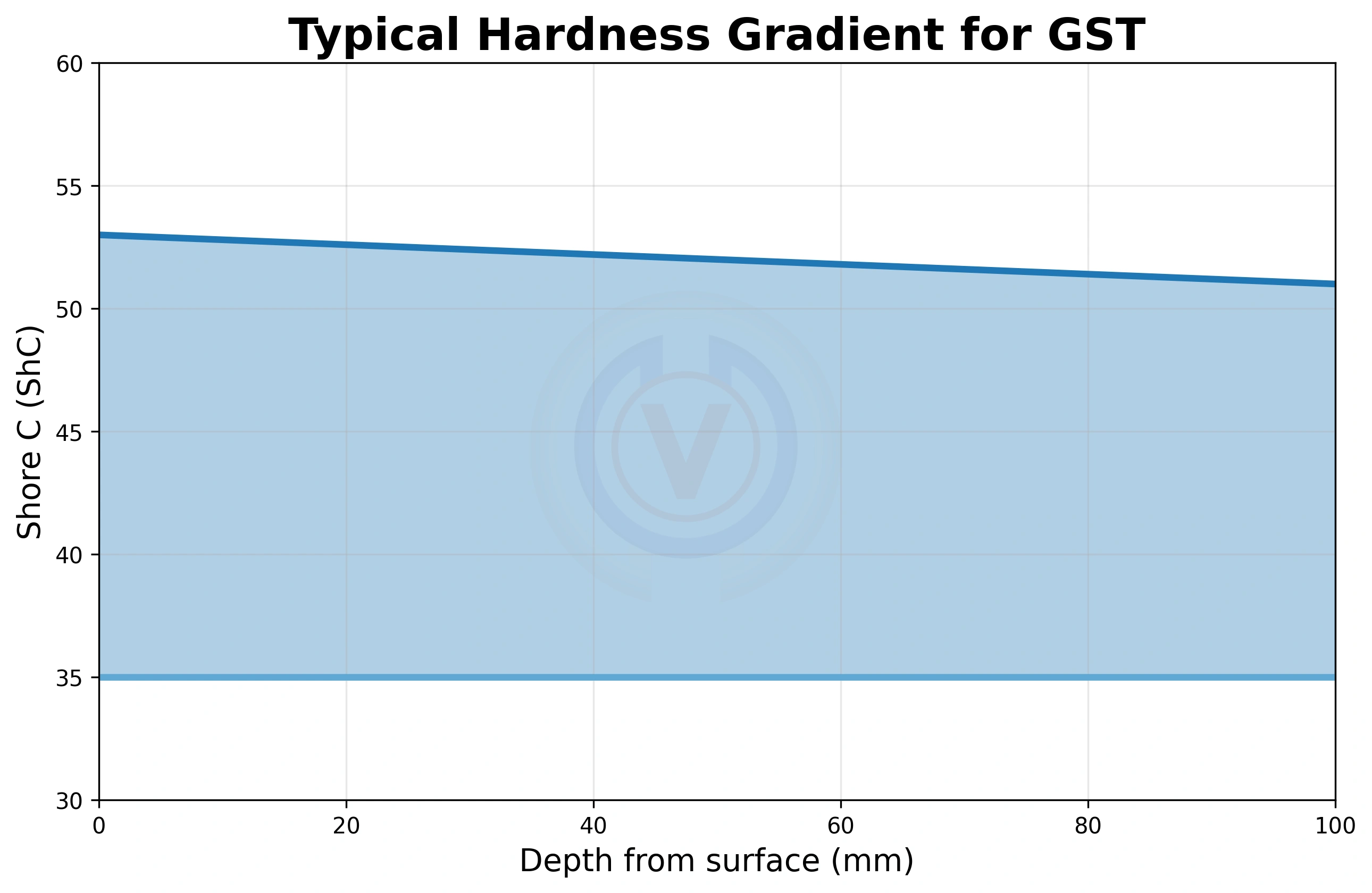
The rolls are typically subjected to multi-stage heat treatment in order to develop the required combination of hardness, toughness and wear resistance. Due to their cast steel structure, GST rolls exhibit good hardness penetration with relatively uniform hardness through the roll section.
Adamite rolling mill rolls, also referred to as semi-steel rolls or adamite steel rolls, are a type of high-carbon cast steel roll positioned metallurgically between conventional cast steel and cast iron roll materials.
The typical carbon content ranges from approximately 1.20% to 2.30%, with alloying additions such as chromium, nickel and molybdenum used to improve strength, wear resistance and hardenability.
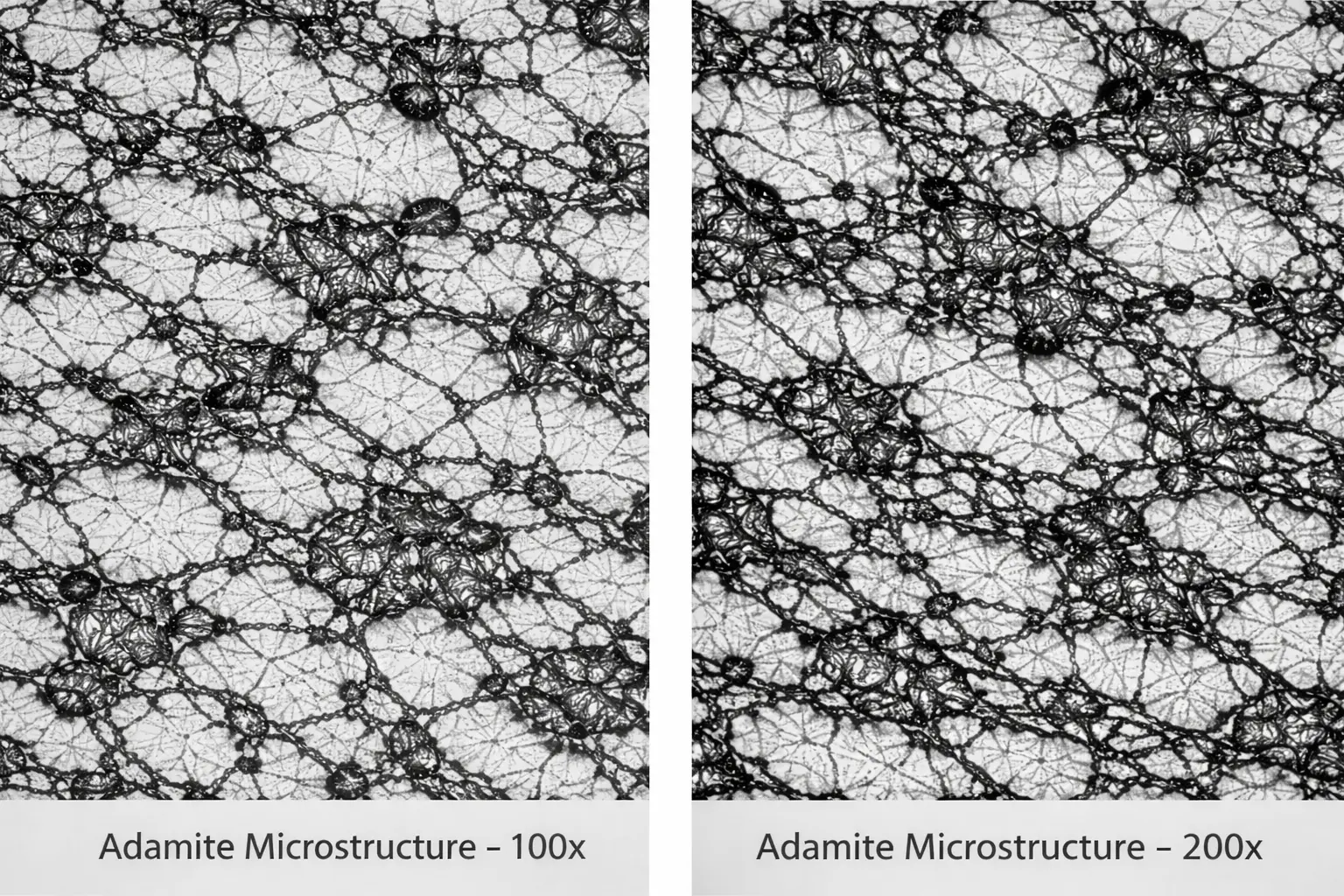
The microstructure generally consists of a pearlitic matrix containing free cementite carbides together with dispersed alloy carbides. Increasing carbon content leads to a greater volume of carbides within the matrix, which contributes to improved wear resistance.
Compared with lower carbon cast steel grades, adamite rolls provide higher wear resistance while maintaining good mechanical strength and adequate toughness for demanding rolling mill conditions.
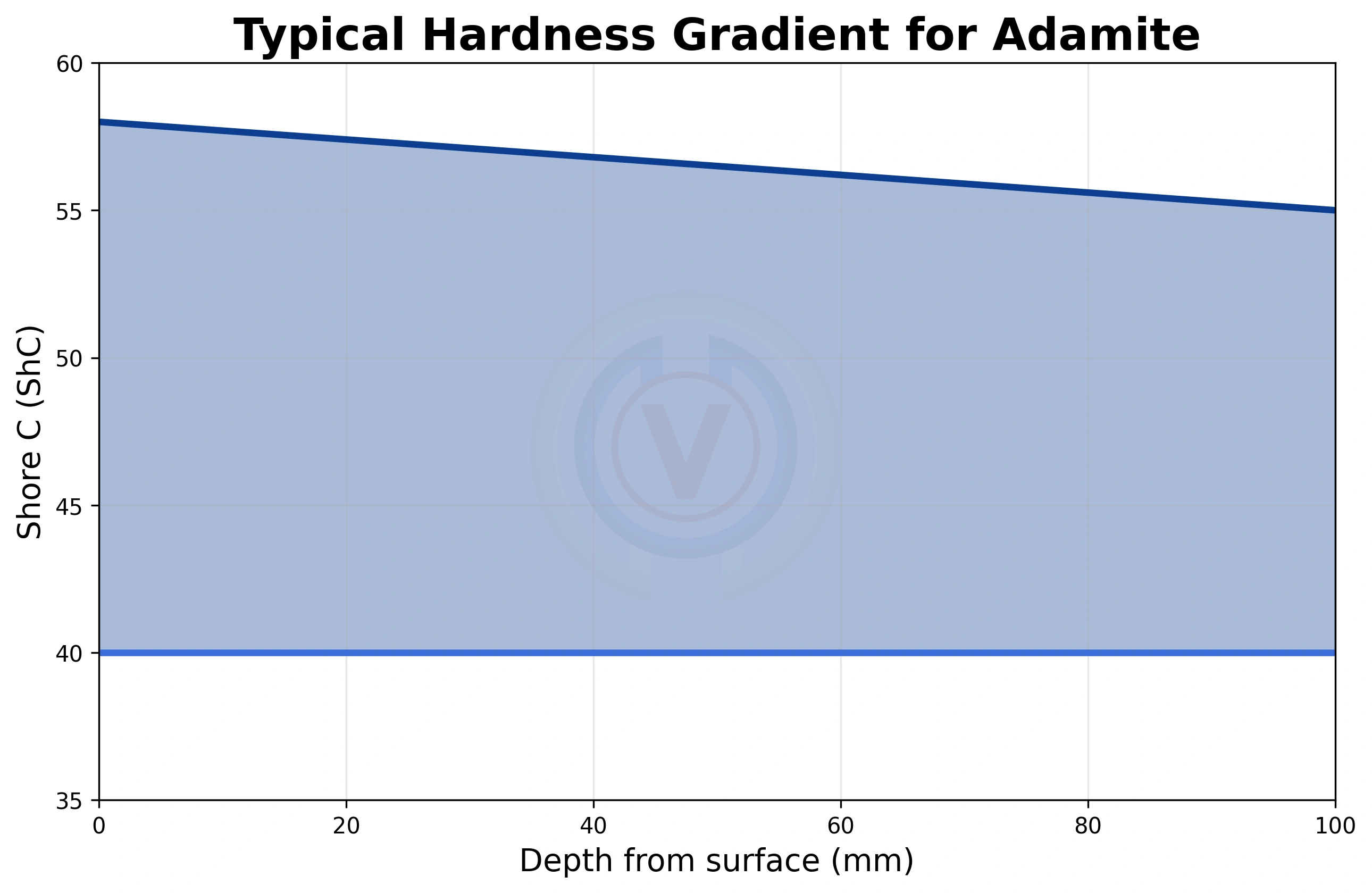
The rolls are typically subjected to multi-stage heat treatment in order to obtain the required combination of hardness, toughness and wear resistance. Due to their semi-steel structure, adamite rolls generally exhibit good hardness penetration and stable mechanical properties throughout the roll section.
Cast Steel Rolls belong to the broader family of cast rolling mill rolls used in
steel rolling mills. Depending on roll design, mill configuration,
rolling parameters and finished products, these rolls may be manufactured by
static casting or centrifugal casting.
Vulcan Metal provides cast steel rolling mill rolls and other cast roll materials for steel rolling mills worldwide from Turkey.
For additional information, you can also consult our pages on
Cast Rolling Mill Rolls and
Centrifugal Cast Rolls.
In addition, you may refer to our dedicated pages covering the main cast roll material families: